07 October 2021

Homegrown and Homemade - Basil Pesto

 In this episode of Homegrown and Homemade, I make basil pesto!

Pesto from Basil I Grew from Seed
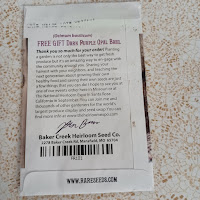
Seed packet for purple opal basil from Baker Creek.
Backstory - in December 2019, I ordered seeds from Baker Creek. In my order they sent a free package of Dark Purple Opal basil seeds. I planted them in the spring of 2020 and they did really well in my garden. I kept saying I was going to make pesto with it, but I didn't own a food processor. I read articles about doing it by hand with a kitchen knife and thought I would give it a try. But I never did.

I planted the basil again this year, and was determined to do more than add the basil to salads and sandwiches. I bought a food processor and within a day was picking basil and making pesto.  
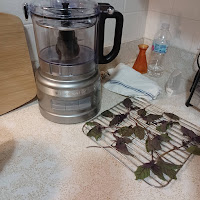
Food processor and basil on a drying rack.

I had more basil than I needed for that batch of pesto, so I put them on a rack to slowly air dry in my oven. 

My basil plant is still producing and I plan to make more pesto, both to eat fresh and to freeze for eating later.  I have planted more seeds and am letting some go to seed to learn if I can keep some going through the winter. 

What is really exciting about this having something else to put on my pasta. I had trouble with acid reflex a few years ago, and one thing I did to help control it was eliminate tomato-based pasta sauces. Since then, I've eaten pasta with a splash of olive oil and some cheese. It is good that way, but I got tired of only that. This summer I started taking fresh tomatoes, bell peppers and some greens from my garden, sautéed them in some olive oil and tossed with pasta and parmesan cheese. And now, I can make pesto and use that as well!

Making the Pesto

I'm reading The Homemade Pantry: 101 Foods You Can Stop Buying and Start Making by Alana Chernila and adapted her recipe. Here's what I did:

Chopped 1/2 cup walnuts in the food processor. 

Added in 1 teaspoon lemon juice and 2 cups packed, fresh basil leaves roughly chopped

Processed until basil leaves were finely minced. 

Sprinkled in garlic powder (fresh garlic can be another trigger to my reflux) and 1/2 teaspoon salt, then turned on processor and poured in 1/2 cup olive oil and processed for a few more seconds. (Basically, I ran it until it looked like I wanted it to.)


Using and Storing the Pesto

Basil pesto in a plastic bowl with a spoon.

I ate some as a dip with crackers, then put the rest in a container, covered with olive oil, and stored in fridge. You can add in grated parmesan cheese when you eat it. You can also put in freezer (without cheese) and store for up to 6 months.

Once the basil in the oven is dry, I'm going to crumble it up and use in recipes as needed.

22 August 2021

Homegrown and Homemade - August 18, 2021

 Here is a triumph for this week:

Bowl with homegrown salad

That is a salad I made to go with my dinner one night. And is all homegrown.

For the salad I picked New Zealand spinach, basil, purslane, celery leaves and stalks (regrown), lemon balm, chives, and bell peppers.

For the dressing, it was homemade with ingredients I bought at the store: olive oil, apple cider vinegar, peppercorns and mustard I made from mustard seeds and vinegar.

Compared to what many people produce from their garden this may not seem like much, but I am pleased that I can put together part of my meal from what I grew in my urban container garden. 

And a confession - this was not the best salad I have ever eaten. I think a different mix of greens (some lettuce would have been nice) or a different dressing would have made it better. But it filled me up and I am proud of being able to grow some of the food I eat.

13 August 2021

Recent Harvests from the Container Garden - Pineapple, Bell Peppers, Sweet Potatoes

 July and August in Florida are hot and humid. It is the off-season for growing your own food, but there are still some things producing.

One of my challenges is learning what will grow through this time. Having them in containers means I can move them around, trying to find a bit more shade and relief from the mid-day sun.

The tomatoes are definitely finished, but I am trying to keep the plants going. I am getting a few blooms, but according to a fellow at the farmer's market, they won't set until nighttime temps fall to around 70 degrees F./21 degrees C. I hope I can keep the plants in good shape so once the temps do fall, they will bloom and set the fruit.

One happy surprise this year has been the pineapples. What I have always heard, and have experienced, is it takes two years for a new pineapple plant to produce a pineapple. We had three pineapples last year, and I replanted the tops. I was surprised when in February, I noticed two of the plants setting a fruit! One of them ripened at the end of July and I harvested it.

Red colander with homegrown pineapple and orange bell peppers in it.

I cannot begin to tell you how good it was. The second one is smaller, and still hasn't ripened, so we have something to look forward to. Since the 3rd plant didn't set fruit this year, I hope it does in 2022. It would be nice to have at least one homegrown pineapple every year instead of every other year.

The bell peppers have really produced well this year. They are not very large, but I've harvested at least 2 or 3 every week for over a month. They start out a light green, then gradually turn yellow, then orange, then red. The package recommends picking when they are orange. Those that have gone to red have a little heat to them, which isn't bad. The variety is Garden Sunshine and I bought the seeds from Seed Savers in late 2019.

Here's is another bell pepper harvest, and a few small sweet potatoes.

Orange bell peppers and small sweet potatoes.

The sweet potatoes are pitiful, aren't they? However, I am thrilled. I had a sweet potato sprout in my pantry last fall, so I stuck it in a pot of dirt. It grew slips, which I pulled off and put in another container. I had 4 or 5 in there, which really was too many, but I was experimenting, to see if it worked.

I finally decided to pull some and see what was happening, and this is the result. The one on the bottom is a half-way decent size. I left two of the plants in there in the hopes that additional room will give any other sweet potatoes the space they need to grow a bit. These I harvested are currently curing and then I'll peel and cook them.

One of my best harvests this summer has been the leaves from the sweet potato plants. I got some from the plants in containers, and some from the slips I put in the ground. Here's how they look:

Sweet potato vines and leaves growing in the ground.

I wash and remove the leaves from the stem, then chop and sauté in some avocado or olive oil. Spaghetti sauce flares up my GERD, so this summer I've been adding fresh bell peppers, green onions and fresh herbs to the sweet potato leaves, then tossing it with pasta and some parmesan cheese. It is good and I love that much of my meal comes from my small urban garden.

What are you harvesting from your garden right now?

08 August 2021

Hurricane Preparation Checklist

 Living in Florida I have learned that we have a season I wasn't used to - hurricane season.

Running June 1st through November 30th, hurricane season is the time of year when the waters in the Atlantic Ocean are warm enough to begin forming hurricanes. 

I have also learned that hurricanes approaching give you plenty of days to watch the weather and worry whether or not it is going to hit near me. It is also a time to get prepared.


The first two years I lived here, there was little tropical activity that was near us. Then in October 2016, Hurricane Matthew swept up the Atlantic side of Florida, and I quickly learned how much there is to get ready.

My husband has lived here for over 20 years, so he understood what had to be done. As he ran through the list of things we needed to do, I began writing them down. After the hurricane passed and we cleaned up the yard, I sat down and added to the list everything I could remember. The list was typed up and the next September, when Hurricane Irma came straight up through Florida, I printed off the list and worked through each item.

Each time I pull out the list and use it, I make changes to the list. Some things get added while others that no longer apply get deleted. 

Preparing for an approaching hurricane is a busy and stressful time. Having the checklist to refer to means I don't have to try to remember what needs to be done.

What about you? If you don't live in a hurricane zone, is there a weather event you routinely need to prepare for? Maybe a checklist will help you as well.

Watch the video and think about how you can apply a checklist to your situation. If you have any questions or comments, please leave them below or at the video.